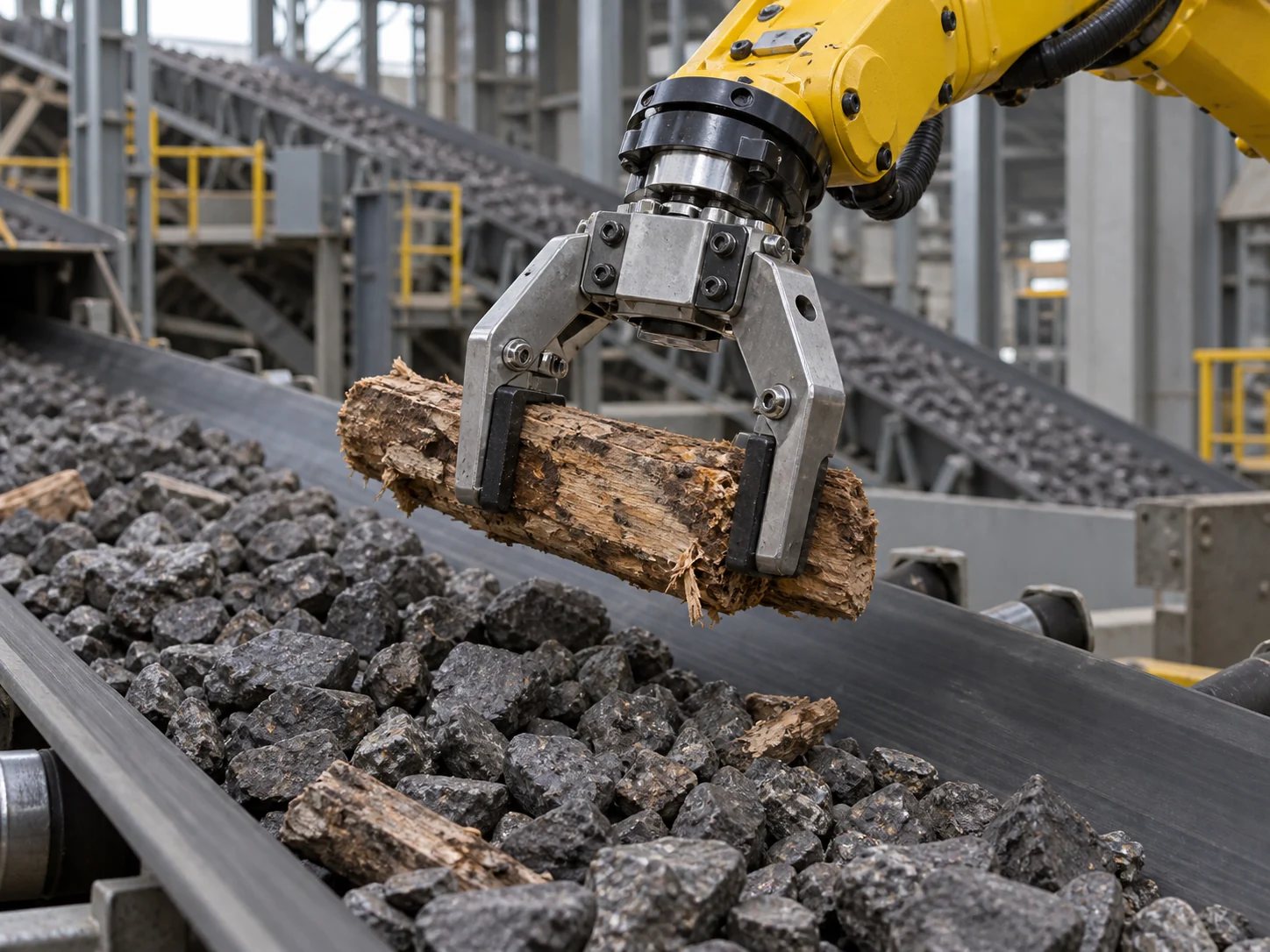
From a detection box to an executable task
A detection box can draw attention to recognition accuracy. But the conveyor keeps moving, and the robot needs a target with a position, class, validity period and grasping conditions. Camera-to-robot calibration, belt-speed synchronization and material rolling or slipping all affect whether detection can become an action.
The mining proposal defines its scope through recognition, localization, graspability and safe placement together. This is more useful than simply listing wood, metal and woven bags. Even woven bags can require very different tools when flat, folded, tangled or deeply buried.
The available window must cover the full action cycle
For an initial constant-speed estimate, divide the effective picking-zone length by belt speed to estimate how long a target remains available. Approach, grip confirmation, transfer, placement and return all consume cycle time. Queueing during consecutive arrivals must also be included; an unloaded arm's round trip is not enough.
When speed changes, target position becomes unstable or time runs short, a task needs retracking or cancellation. An old position cannot be treated as current. Give every target a unique ID and carry that record through detection, assignment, picking and confirmation to avoid double counting and explain missed removals.
Judge final removal first, then trace the losses
Lifting an object once does not automatically mean success: it may fall during transfer or enter the wrong collection area. The proposal therefore records recognition/localization, actual picking, belt removal and correct placement separately. Following that chain reveals whether the limit is vision, cycle time, the gripper or collection layout.
Record reasons for out-of-scope targets separately. Freeze object classes, speed, material depth, samples and exception procedures before testing, and retain synchronized video and task logs. Check this evidence before interpreting summary percentages to judge whether results can be reproduced in comparable conditions.