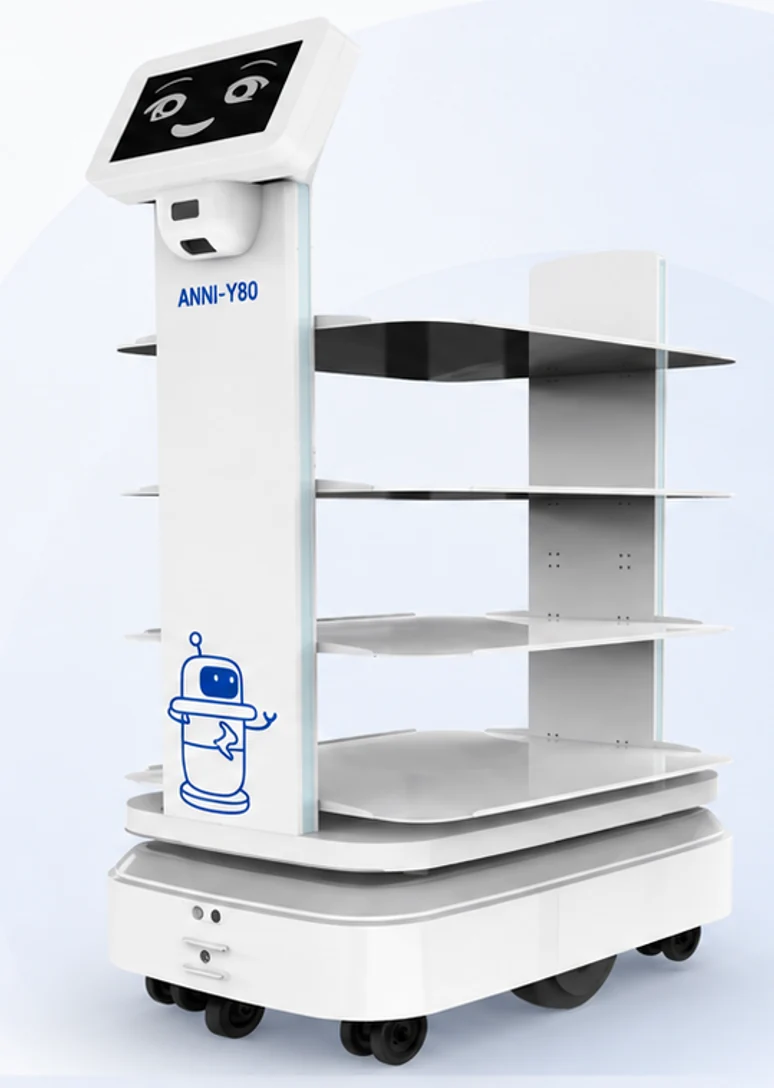
The same hospital still has different operational boundaries
The hospital material groups delivery, guidance, inventory and distribution-room inspection together. They can share some navigation and maintenance capabilities, but recipients, permissions and exception handling differ. Pharmacy-to-ward delivery needs compartment, recipient and receipt checks; asset inventory depends on mapping tags to records.
Define how goods and information move before choosing the robot and configuration. Who creates a task or opens a compartment? Where do unattended deliveries go, and which system receives the records? These questions determine whether the workflow closes. Navigating to the destination is just one step.
Incoming condition creates two distinct sharps-handling routes
The sharps proposal makes a clear distinction. Only confirmed discarded items whose specific loose-item process has been approved enter controlled conveying and individual sorting. Material already in medical-waste containers stays packaged and is checked, sealed and handed over as a whole container. These routes must not be merged merely to accommodate a robot.
The four streams are needles, blades, discarded scissors/forceps and items requiring confirmation. Unclear or low-confidence items need dedicated handling. Sorting proceeds only when grasping is safe; otherwise the belt stops and the item is isolated. Reusable instruments, unidentified mixed input and certain special classes are outside the first-version scope.
A completed placement requires agreement between item, container and record
With robots working from both sides, assign each item only once and enforce mutual exclusion in shared space. Before picking, check the receiving container's identity and remaining capacity. Confirm the grip after picking and placement after release, then update counts and destination. This separates correct recognition, completed motion and successful handover.
Thin needles, reflections, damage and contamination affect recognition and grasping in different ways, so prototype tests must cover them. Cycle times and accuracy in the material are proposed validation targets. Also assess isolation of exceptions, cleaning, maintenance and human intervention; a smooth demonstration alone cannot establish suitability.